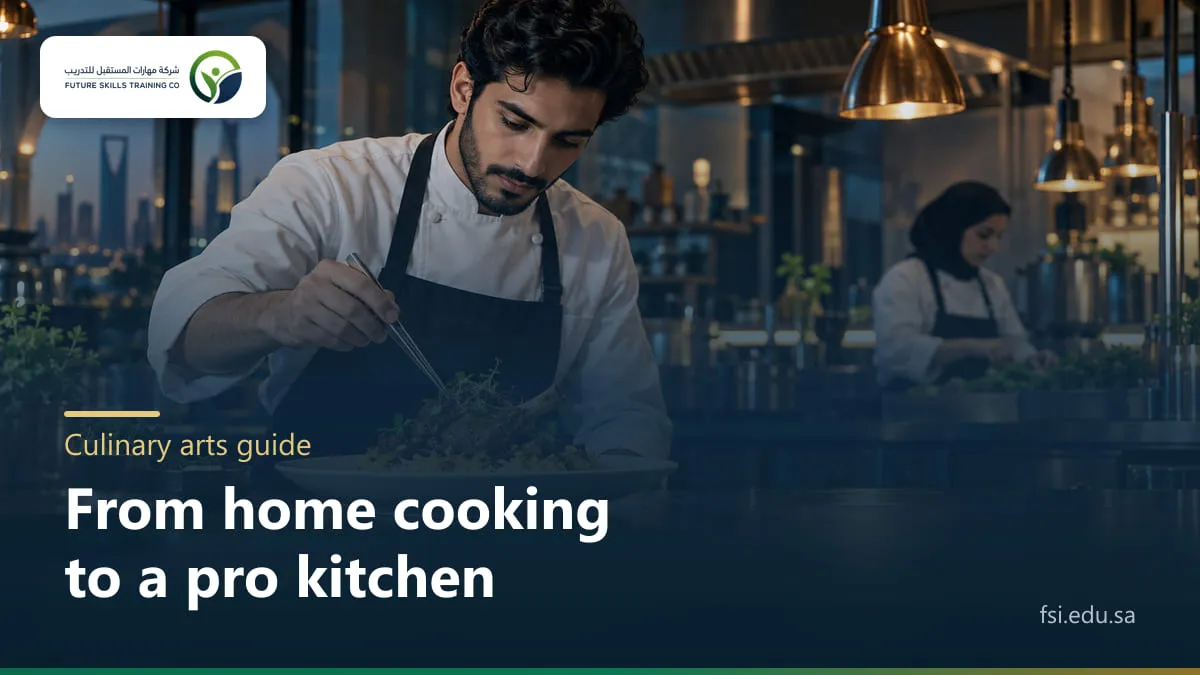
On her first day in a new Riyadh restaurant, Sara stands at the cutting board. She cooks well at home, but the head chef asks her to dice five kilograms of onions into even cubes in twenty minutes, then quizzes her on how raw chicken should be stored. That is the gap between cooking well and working in a professional kitchen. It is also what most people mean when they search for a culinary arts course: a structured path from the home kitchen to the working kitchen.
Why demand for cooking skills is growing in Saudi Arabia
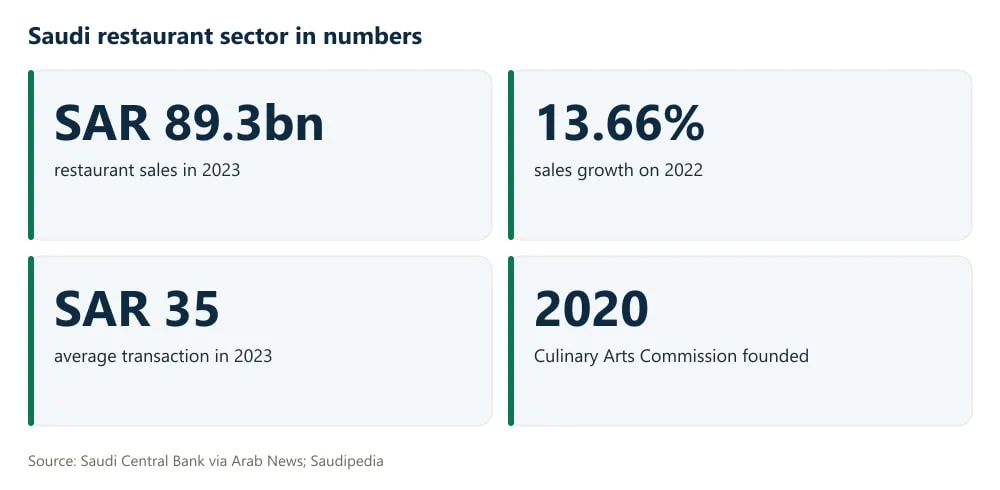
The sector is expanding fast. According to Saudi Central Bank figures reported by Arab News, restaurant sales in the Kingdom reached SAR 89.3 billion in 2023, up 13.66% on the previous year. At the same time the average transaction fell from SAR 38 to SAR 35, which points to tougher competition and more selective diners. Restaurants that want to last need crews that cook consistently and waste less.
On the cultural side, the Culinary Arts Commission was set up in February 2020 as one of eleven cultural commissions under the Ministry of Culture, with a mandate that includes developing the sector and promoting Saudi cuisine at home and abroad. A cook who can deliver local dishes to professional standards is in more demand than ever.
What a good culinary course should teach
A serious course does not start with recipes. It starts with the foundations every recipe rests on. Look for these topics in any course outline:
- Station organisation: setting out tools and ingredients before you start, known in kitchens as mise en place.
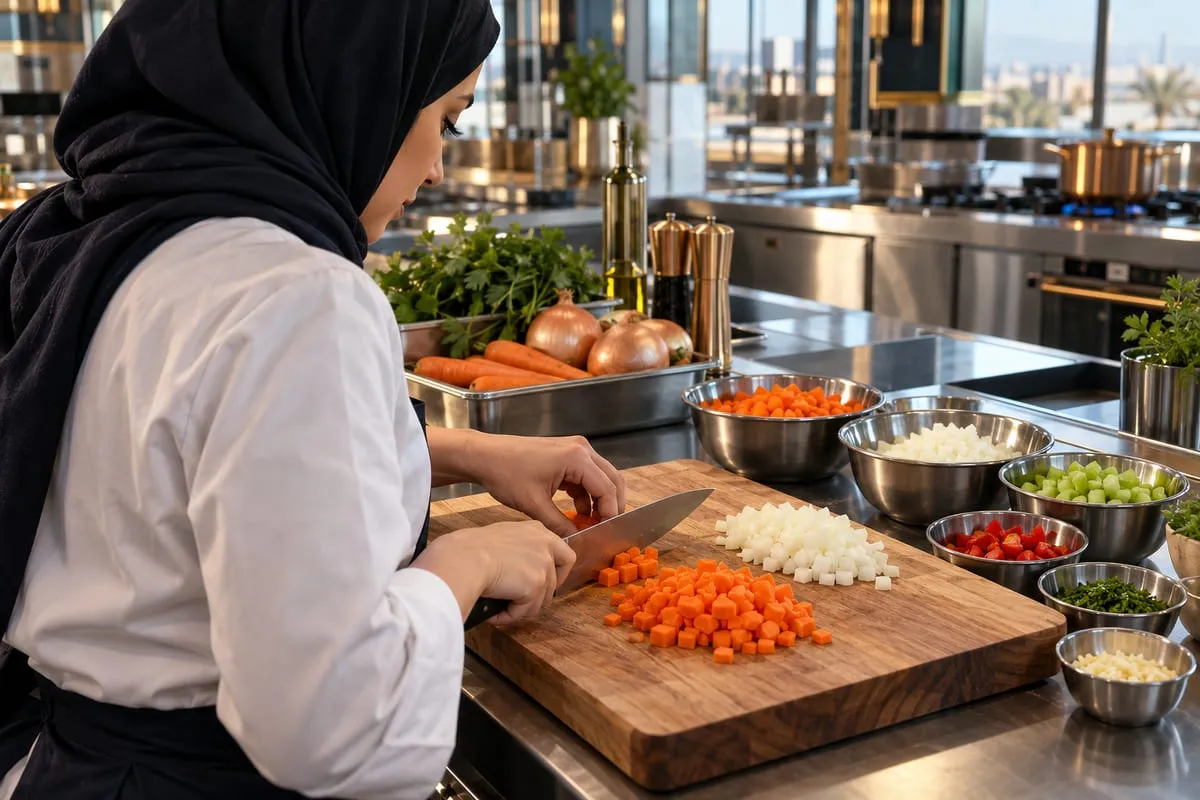
- Knife skills: the right grip and standard cuts, because even pieces cook evenly.
- Heat control: when to use high heat and when to go gentle, and how texture changes.
- Dish structure: understanding what repeats across local and international dishes, so you can create, not just memorise.
- Plating: portion size and balance of colour, because guests eat with their eyes first.
- Food safety: the cold chain, separating raw from ready-to-eat food, and preventing cross-contamination.
What a culinary certificate actually means
When you look for an accredited culinary course, ask one precise question: who stands behind the certificate? Some courses issue a completion certificate from the institute; others are certified by a named academic body. The difference matters on a CV, because employers want to know the issuer, not a vague label.
Keep in mind that a course certificate and a health certificate are different things. Anyone working in restaurants or cafés needs a health certificate issued electronically through the Balady platform after a medical check, plus a health awareness test in the cities where that programme applies. It is valid for one year and can be renewed up to 60 days before it expires. Neither replaces the other, and the requirements should be checked on the platform itself as they can change.
How to choose the right course
- Define your goal: a job in a restaurant or hotel, a home-based food business, or a serious hobby. Each needs a different focus.
- Read the outline, not the title: a course covering knife skills and food safety beats one that only lists recipes.
- Ask who certifies it by name, and check the hours and delivery format.
- Plan your practice: an online course explains and corrects, but skill is built by repetition in your own kitchen. Set aside daily practice time.
- Sort out your health certificate early if you plan to work in a food business.
Common mistakes
- Assuming that memorising recipes is enough, when a professional kitchen measures speed, precision and hygiene together.
- Neglecting food safety because it does not show in a photo of the plate, although it is the first thing a head chef checks.
- Choosing a course with no clear outline or no named certifying body.
- Waiting to feel perfect before applying for work, when first experience comes from a real kitchen.
Where to start
If you want a structured start, the Culinary Arts programme at Future Skills Training, an institute licensed by the Technical and Vocational Training Corporation, runs for 15 training hours online via live sessions over five days. It covers six areas: professional kitchen basics, local and international dishes, cutting and preparation, plating, quality and food safety, and organising work during the rush. Its certificate is accredited by Majmaah University. The programme gives you the foundation and the method; mastery comes from what you practise afterwards.